Saturday, March 31, 2007
Friday, February 16, 2007
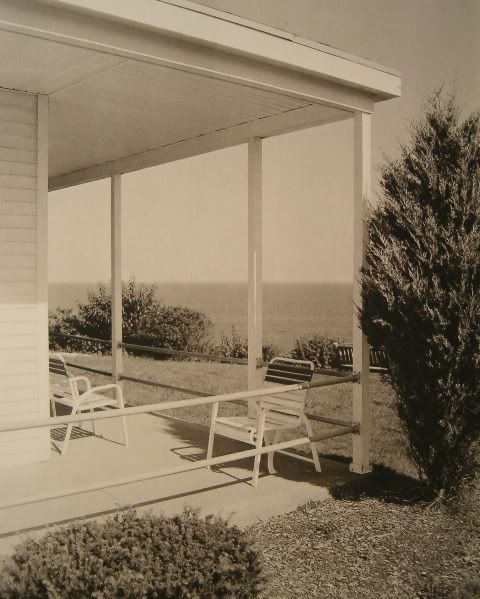
Maine 1999 8x10in. Palladium print
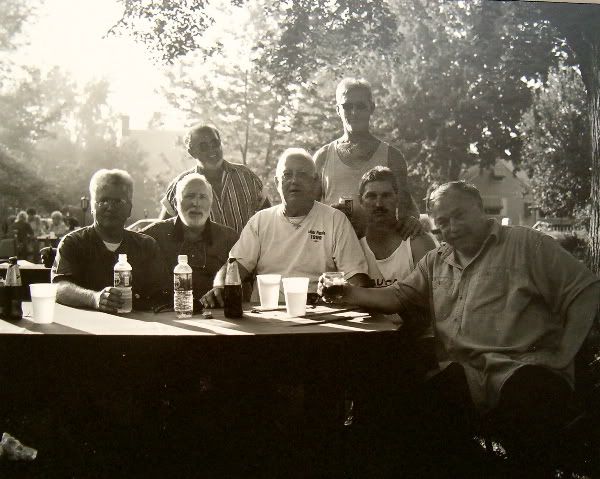
4th of July at Jim & Judy's , NY 1999 8x10 in. Silver gelatin contact print
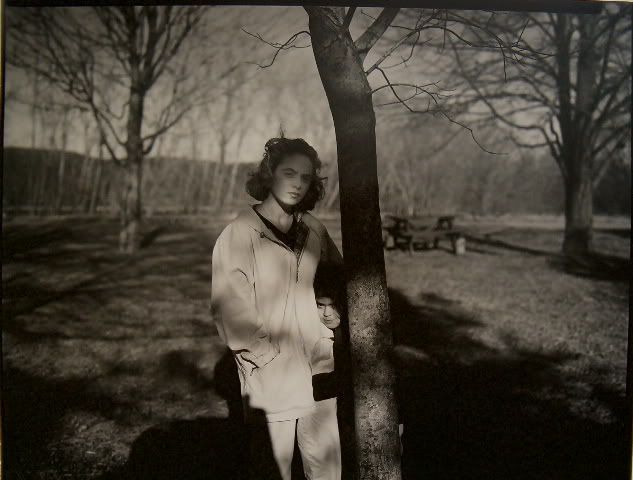
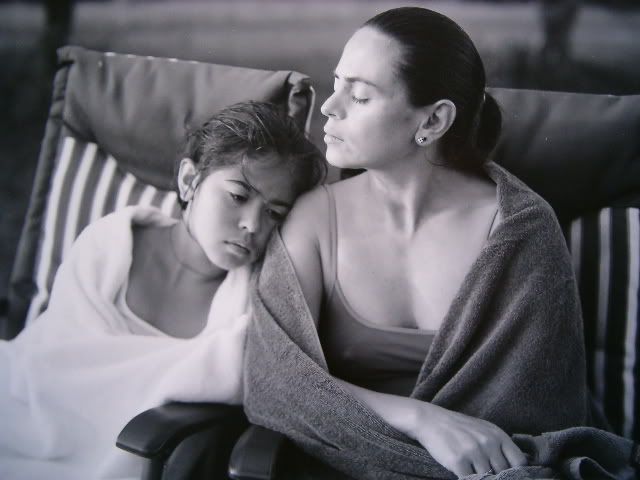
Claudia and Mandy, Sheffield 1998 11x14 in. Silver gelatin contact print
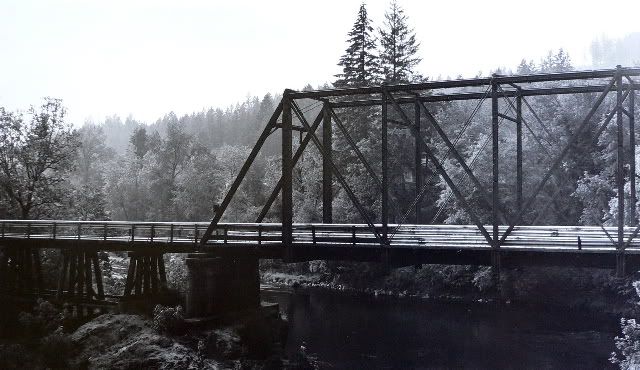
Oregon 1995 12x20 in. Silver gelatin contact print
Claudia & Mandy, Summer, Chatham,NY 2004 8x10 silver gelatin contact print
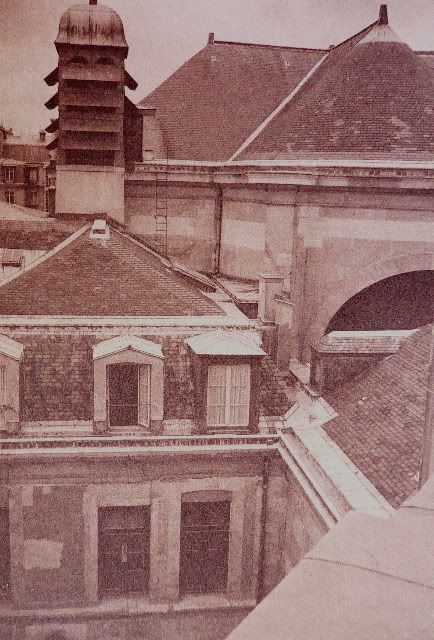
Paris 2006 6x9 cm. Palladium print
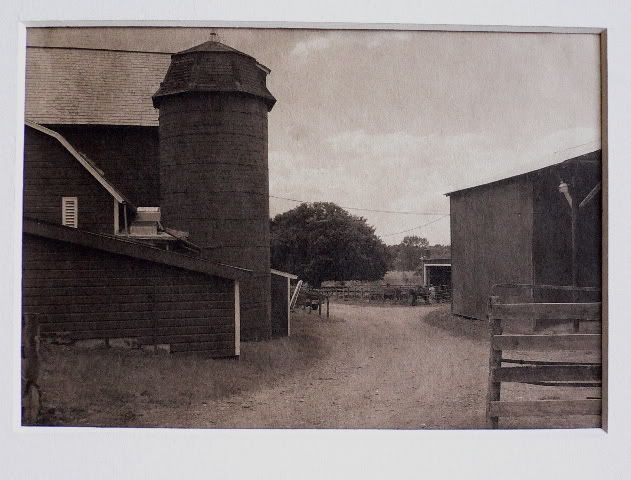
Little Farms,Kinderhook, NY 2005 5x7in. Platinum-Palladium contact print
February Exhibit
Its been a few months since I last updated my blog so I thought I'd start off by adding a group of photographs that I've been looking at these past few days as I contemplate warmer weather.
Most of these exude a feeling of warmth and the luxurious radiance that only Summer light gives off.
Maine, 1999 was taken near the cliffs of Ogunquit, a place that is like no other. This humble porch and how it is juxtaposed against the infinite breath of the Atlantic is what my soul is yearning for ....a personal portal to step into.
The portrait of mother and daughter is a bit of a tribute to Caravaggio and Vermeer. I love the way skin glows during a late afternoon in July- this is what an 8x10 contact print does so well......there is both immediacy and tenderness.
Thanks for stopping by.
Friday, December 08, 2006
Rock City Road
There's an amazing stretch of hills and woods not too far from my place that one gets to via Rock City Road .
I've been looking at a small quarry of stones and pines nestled peacefully at the peak . Not sure why I haven't photographed it yet, but as I drove by there the other day on my way to Hillsdale I saw it in just the right light. , about 1:30 in the afternoon on a sunny day .
It looks like similar weather for the next few days so I think I'll go back and put it on film. The calotypes of Cuveliers Fountainbleu work came to mind when I first came across that scene.
I've been looking at a small quarry of stones and pines nestled peacefully at the peak . Not sure why I haven't photographed it yet, but as I drove by there the other day on my way to Hillsdale I saw it in just the right light. , about 1:30 in the afternoon on a sunny day .
It looks like similar weather for the next few days so I think I'll go back and put it on film. The calotypes of Cuveliers Fountainbleu work came to mind when I first came across that scene.
Monday, December 04, 2006
Books of Note
Last month I got my copy of Friedlander's new book Cherry Blossom Time:The Complete Works published by the Fraenkel Gallery.
Originally introduced as a limited edition portfolio of photogravures by Thomas Palmer this series didn't surface much and was bought up rather quickly by collectors and museums.
I have never gotten a chance to see the gravures but knowing the work of Palmer, I'm sure they are breathtaking.
The book is an epic tome to this spiritual Spring phenomenom in Kyoto.
The quality of the reproductions are superb ! They remind me of platinum prints in their delicacy and tonal range. Printed in the dry-trap process on un-coated stock -it is not too different from both the Factory Valleys and American Monument books ,Cherry Blossom Time is a joy to look at.
One of the things that keeps me interested in his work is Friedlander's never ending ability to see the world so clearly in such a crazy way. Its almost as if he overdoses on his meds before he goes out with the Leica. I can imagine him tripping over some rocks, falling on his ass, looks up sees a picture and "click".....walk,rinse, repeat.
In Cherry Blossom Time we get to see the softer side of Lee. The sequence is beautiful. There are at least a dozen that just take my breath away. I am sure I will be looking at this book for some time.
The book is a steal at 60.00 ! I've always said that some of Friedlanders best works are his B sides. Hopefully someone will see fit to publish the Shiloh Battlefield work. I've seen that series and it is stunning. You see a side of Friedlander that is hardly ever seen.
Hey Lee ! Please go back to shooting the Leica . The Superwide work is nice, but IMHO the world you know is still out there in 35mm.
When I was in Paris in October I got a chance to see his show at the Jeu de Paume and I couldn't help but notice how much the French embraced Lee's work. They get it !
From the reviews of his MoMa retro back in July Americans in general still don't know what to do with his work.. They seem ( the critics ) to think there's too much of it. To me thats like saying Atget took too many plates of Paris.....why didn't he travel to Rome instead ?
I guess thats why Paris loves him. They get it.
Robert Adams: Pine Valley
I have not gotten this book yet,but saw it at the Bard College Library.
This is one of Adams' new books that has been released in almost series form. The other is the Portrait in the Landscape book and the Interiors monograph.
I was telling Frank Gohlke just the other week that Bob's work in 35mm is my favorite. I love the immediacy and openess of this work.
There's a constant invitation to come along with him to all these fields and woods he cherishes .
I can't wait to get my copy.
As an aside I just got a note from him the other week and it seems as though he still on occasion carves out woodblocks for prints and notecards.
I feel richer for knowing him.
Originally introduced as a limited edition portfolio of photogravures by Thomas Palmer this series didn't surface much and was bought up rather quickly by collectors and museums.
I have never gotten a chance to see the gravures but knowing the work of Palmer, I'm sure they are breathtaking.
The book is an epic tome to this spiritual Spring phenomenom in Kyoto.
The quality of the reproductions are superb ! They remind me of platinum prints in their delicacy and tonal range. Printed in the dry-trap process on un-coated stock -it is not too different from both the Factory Valleys and American Monument books ,Cherry Blossom Time is a joy to look at.
One of the things that keeps me interested in his work is Friedlander's never ending ability to see the world so clearly in such a crazy way. Its almost as if he overdoses on his meds before he goes out with the Leica. I can imagine him tripping over some rocks, falling on his ass, looks up sees a picture and "click".....walk,rinse, repeat.
In Cherry Blossom Time we get to see the softer side of Lee. The sequence is beautiful. There are at least a dozen that just take my breath away. I am sure I will be looking at this book for some time.
The book is a steal at 60.00 ! I've always said that some of Friedlanders best works are his B sides. Hopefully someone will see fit to publish the Shiloh Battlefield work. I've seen that series and it is stunning. You see a side of Friedlander that is hardly ever seen.
Hey Lee ! Please go back to shooting the Leica . The Superwide work is nice, but IMHO the world you know is still out there in 35mm.
When I was in Paris in October I got a chance to see his show at the Jeu de Paume and I couldn't help but notice how much the French embraced Lee's work. They get it !
From the reviews of his MoMa retro back in July Americans in general still don't know what to do with his work.. They seem ( the critics ) to think there's too much of it. To me thats like saying Atget took too many plates of Paris.....why didn't he travel to Rome instead ?
I guess thats why Paris loves him. They get it.
Robert Adams: Pine Valley
I have not gotten this book yet,but saw it at the Bard College Library.
This is one of Adams' new books that has been released in almost series form. The other is the Portrait in the Landscape book and the Interiors monograph.
I was telling Frank Gohlke just the other week that Bob's work in 35mm is my favorite. I love the immediacy and openess of this work.
There's a constant invitation to come along with him to all these fields and woods he cherishes .
I can't wait to get my copy.
As an aside I just got a note from him the other week and it seems as though he still on occasion carves out woodblocks for prints and notecards.
I feel richer for knowing him.
Tuesday, November 14, 2006
Winter Projects
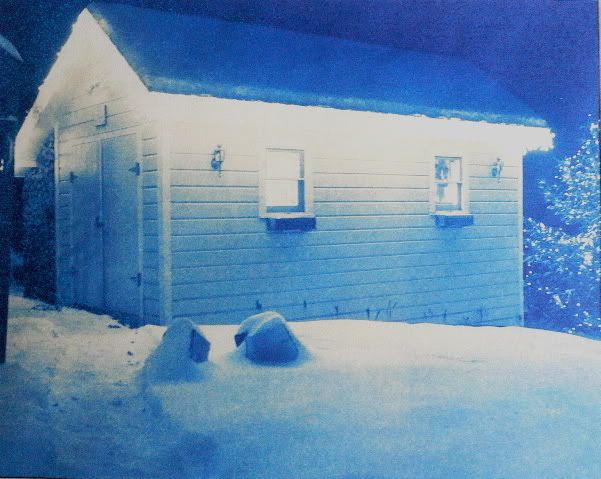
Joe's Tool Shack,Christmas,Stuyvesant,NY 2003
I feel somewhat fortunate at the moment.
Having gone thru my archive of prints and negatives these past weeks the reality of how much work I have accumulated seems surreal.
The earliest negatives date back to 1986 in 4x5 and 5x7 in size. During this time I was attending the Art Center College of Design in Pasadena lost in a fog between commercial and fine art studies.
By 1988 I was already commited to the 8x10 and was productive in the American West where I lived at the time.
From 1989 to 2000 the work was mainly 11x14/14x17 & 12x20. I was enamored with the idea of working with such large plate-type cameras,both as a means to a bigger print and also to somewhat carry on the tradition of Watkins,Gardner and Brady. Most of these negatives I have yet to print.
Whether I care to admit it or not....I think my vision has and always will have roots to the Naturalists.
My friend Gordon Baldwin who was one of the curators at the J. Paul Getty Museum's Photography Department once told me during a 1996 exhibit of mine at the Jan Kesner Gallery in Los Angeles ...." Michael your work has an Emerson feel about it ". At the time I really thought my work belonged more to the Atget -Walker Evans school. Ultimately, Gordon was right . Artists such as Peter Henry Emerson,Frederick Evans and my favorite Arthur Wesley Dow are sub-consiously in my psyche. Ghosts from the early 20th century that are prompting me to continue as if it were truly a Linked Ring .
Like them, my subject matter is also the landscape. In particular, marshes,estuaries,fields and forests. Perhaps its a form of escapism from the modern world, but I will never tire of these places.
Being in my 40's ,I must realize that the time is now to make a commitment to championing this way of seeing .Pursue it to the end as it no longer matters to me if this is out of fashion in the arts today. My work has always been for personal reasons, and as long as I stay true to my vision- time will hopefully be kind to the legacy I leave behind.
Wednesday, November 01, 2006
Thoughts of New England and Paul Strand
During my bike ride this morning the work of Paul Strand came to mind.
I've been looking at his photographs for 20 years , they remain as eloquent and truthful as the first time I saw them.
Being a converted New Englander- I can easily see why Strand was so productive here.
There's a cluster of barns that I've been passing by now at least twice a week for the last 7 years here in Old Chatham . I see something new and different everytime I go by it.
Strand would have parked himself there for a week I'm sure.
Autumn is when it looks best as the light is more angled by mid day. Its noble lines turn heroic
soon after the lunch hour. If this weekends weather bodes well- I just might take the 5x7 Graflex over there, I think its about time.
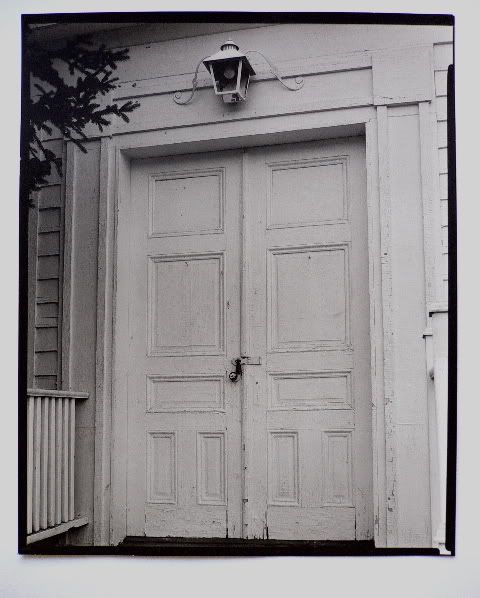
"Door, Meeting House, Austerlitz ,NY 2002" is a photograph of mine that I will label as an hommage to Strand.
* Please excuse the double images as my hosting site is doubling up on my files for some reason.
Tuesday, October 31, 2006
Sun Prints in Fall Light
One of the inherent attributes of hand-coated paper is how differently each one responds
to its environment.
Variables such as water,ambient temperature, relative humidity.....full moon or crescent all contribute to the final "look" and feel of the print.
So as of late I've been making both Palladiums and Cyanotypes of the new work and negs from my archives. Fall conditions make it rather difficult to produce lush palladiums as the paper stores up static electricity . I've tried all sorts of pre-humidifying and the prints still don't compare to ones made during the summer months when humidity and heat are always in the air.
Cyanotypes are a different story. Not as finicky and the prints I've been getting in Fall light are spot on. In a way , I think the cyanotype is the perfect medium for me as it fits my temperament.
Meaning, I'm a results driven person, and when I need to see something in the positive form , I get all flustered and un-insprired when a darkroom session goes a wry.
The blue process has never let me down, and I have a good supply and source for the perfect paper. I've use it for almost 2 decades and it hasn't changed much.
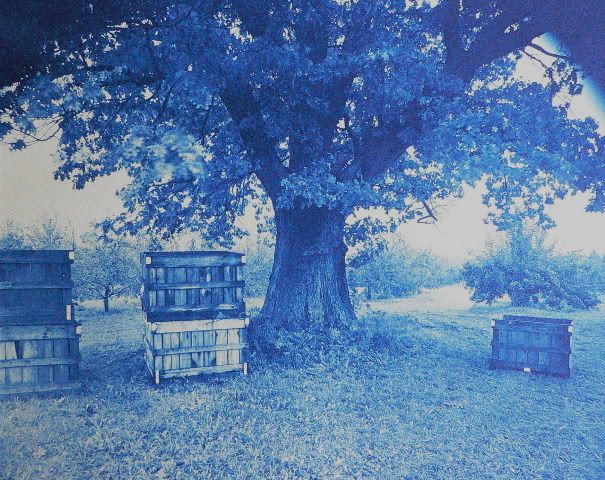
I made a print of " Samascotts Oldest Apple Tree,Kinderhook , NY 1998 " , an 8x10 neg.
The print has a superb tonal range . The scale was almost similar to that of a salt print. Perhaps due to our water change.My Culligan filtration unit is just about toast and I suspect that the water is full of minerals that play with how the print develops during the wash.
Ever since we moved to the farm in 2000, I would say that most of my prints have been toned by water.
When I get more time I'll post pictures of some of the new prints I've been working on.
Tomorrow looks like another good weather day so I'll get a chance to continue my unusual spurt of productivity.
One of the inherent attributes of hand-coated paper is how differently each one responds
to its environment.
Variables such as water,ambient temperature, relative humidity.....full moon or crescent all contribute to the final "look" and feel of the print.
So as of late I've been making both Palladiums and Cyanotypes of the new work and negs from my archives. Fall conditions make it rather difficult to produce lush palladiums as the paper stores up static electricity . I've tried all sorts of pre-humidifying and the prints still don't compare to ones made during the summer months when humidity and heat are always in the air.
Cyanotypes are a different story. Not as finicky and the prints I've been getting in Fall light are spot on. In a way , I think the cyanotype is the perfect medium for me as it fits my temperament.
Meaning, I'm a results driven person, and when I need to see something in the positive form , I get all flustered and un-insprired when a darkroom session goes a wry.
The blue process has never let me down, and I have a good supply and source for the perfect paper. I've use it for almost 2 decades and it hasn't changed much.
I made a print of " Samascotts Oldest Apple Tree,Kinderhook , NY 1998 " , an 8x10 neg.
The print has a superb tonal range . The scale was almost similar to that of a salt print. Perhaps due to our water change.My Culligan filtration unit is just about toast and I suspect that the water is full of minerals that play with how the print develops during the wash.
Ever since we moved to the farm in 2000, I would say that most of my prints have been toned by water.
When I get more time I'll post pictures of some of the new prints I've been working on.
Tomorrow looks like another good weather day so I'll get a chance to continue my unusual spurt of productivity.
Subscribe to:
Posts (Atom)